
Why Community Gathering Matters

Community is built through shared moments and mutual support.
Research consistently shows that meaningful social connections contribute to better mental and physical health. But it is more than simply living in the same neighbourhood. For Black and Brown communities in particular, gathering has also long been a way of preserving culture, sharing knowledge and creating spaces of collective care in the face of social and structural inequalities (hooks, 2009).
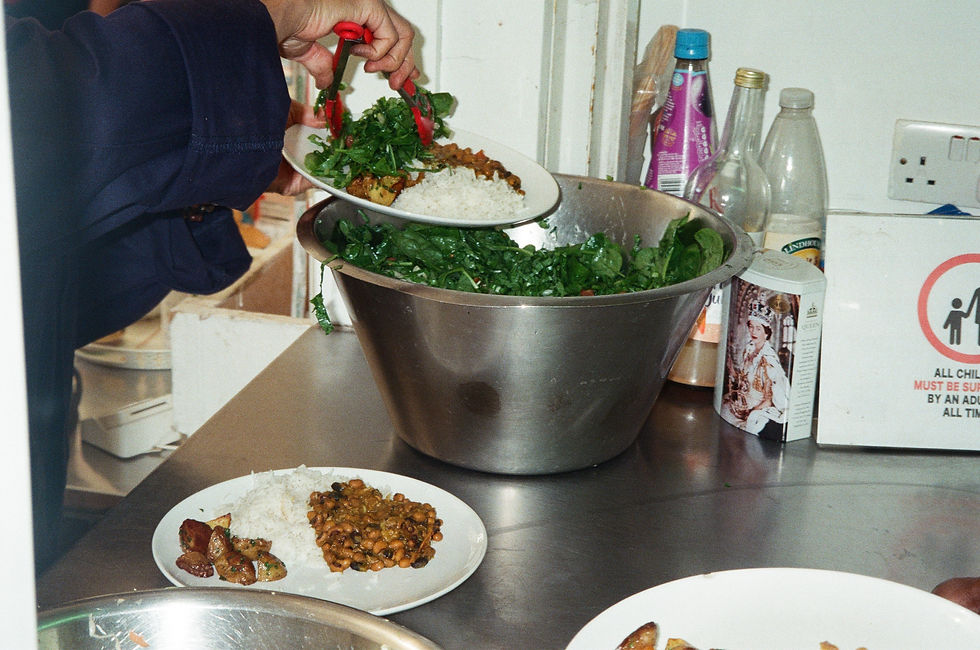
Whether we are growing food together, dancing to live music or exchanging stories over a meal, at Wolves Lane Centre we are keen to build greater resilience and more cohesive communities.
As our lives become increasingly shaped by digital interactions and fast-paced routines, opportunities to gather in person have never been more important.

Community Improves Wellbeing
Meaningful social interactions have been linked to improved mental and physical health, with social isolation being recognised as a significant risk factor for poor health outcomes. But rather than viewing wellbeing as an individual pursuit, many Pan-African philosophies understand health as something nurtured through reciprocity and shared responsibility.
We also know that spending time in nature alongside others can reduce stress and improve psychological wellbeing. Community gardens bring these ideas together by providing spaces where people can tend to crops or learn skills alongside one another.
Gathering Preserves Culture and Knowledge
Gathering has long been a way of strengthening collective identity. Across Africa and the wider diaspora, communal traditions have enabled generations to share histories, languages and agricultural practices. Often this occurs in the face of displacement, colonialism and systemic inequality.
Community gatherings continue this tradition today. In cooking together or celebrating music and art, knowledge can be shared beyond the walls of a classroom. In community gardens such as Wolves Lane Centre, the simple act of growing and sharing food becomes a living expression of heritage, reminding us that culture is to be cultivated and passed on.
Community Creates Collective Power
Historically, communities have relied on shared agricultural knowledge of the land to sustain both people and culture. Today, these practices remain vital as communities face rising food insecurity and climate change.
Achieving environmental sustainability must also mean achieving social justice, and community spaces play a key role in building this resilience. By creating opportunities for people of different backgrounds to gather. This intergenerational exchange equips future generations with the confidence and connections needed to build fairer and more sustainable food systems.
Find out about upcoming Wolves Lane Centre events here.
Sources:
Belonging: A Culture of Place - Bell hooks (2009)
Comments